

A rotator cuff injury occurs when one or more of the tendons that stabilize the shoulder become irritated, strained, or torn. The rotator cuff is essential for lifting and rotating the arm while maintaining joint stability. When damaged, it can cause persistent shoulder pain, weakness, and limited range of motion. Discomfort may worsen with overhead movement or while sleeping on the affected side. At CURA Pain Centers, we carefully evaluate the extent of tendon involvement to provide minimally invasive treatments designed to relieve inflammation and restore shoulder function.
What Causes a Rotator Cuff Injury?
Rotator cuff injuries may result from repetitive overhead motion, sudden trauma, lifting strain, or gradual tendon degeneration over time. Athletes, manual laborers, and individuals with repetitive shoulder activity are at increased risk. As tendons weaken, they may become inflamed or partially torn, leading to mechanical instability.
Patients often experience shoulder weakness, pain when raising the arm, stiffness, or a dull ache that worsens at night. In more severe cases, limited mobility or a catching sensation may develop. Because these symptoms can overlap with arthritis or impingement syndrome, accurate clinical evaluation is essential.
Our specialists assess imaging findings, tendon integrity, and joint mechanics to determine whether structural damage or inflammation is directly contributing to the discomfort.
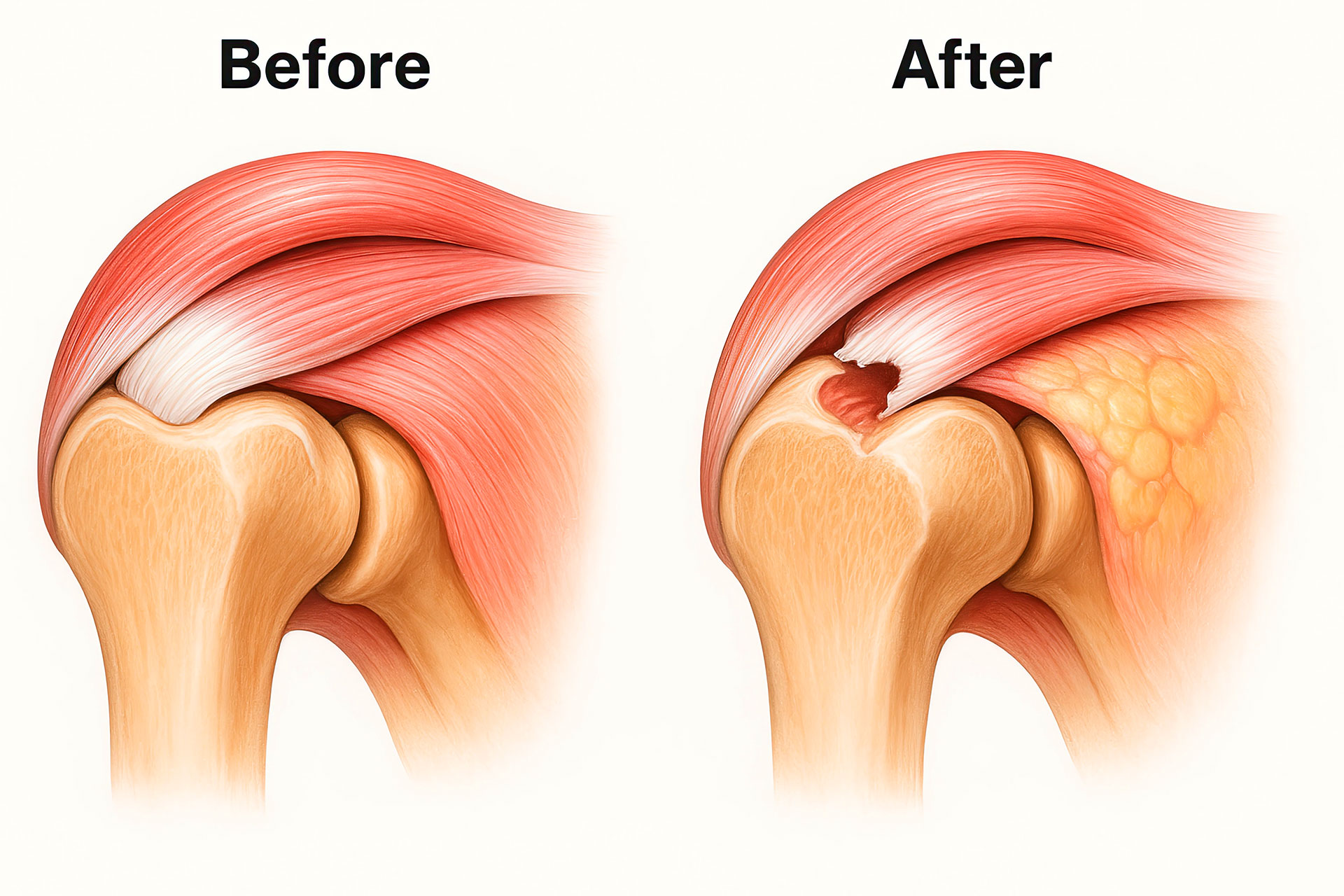

Minimally Invasive Treatment for Rotator Cuff Injury
At CURA Pain Centers, treatment focuses on reducing inflammation and supporting tendon healing without immediate surgery whenever possible. Depending on the severity of injury, options may include image-guided injections, regenerative therapies, or other targeted interventional procedures performed safely in-office.
These minimally invasive therapies aim to relieve pain, improve strength, and restore comfortable shoulder movement. Many patients experience meaningful improvement after appropriately directed care. If shoulder weakness or persistent pain is limiting your daily activities, early specialized evaluation can help prevent progression and support long-term joint stability.
