
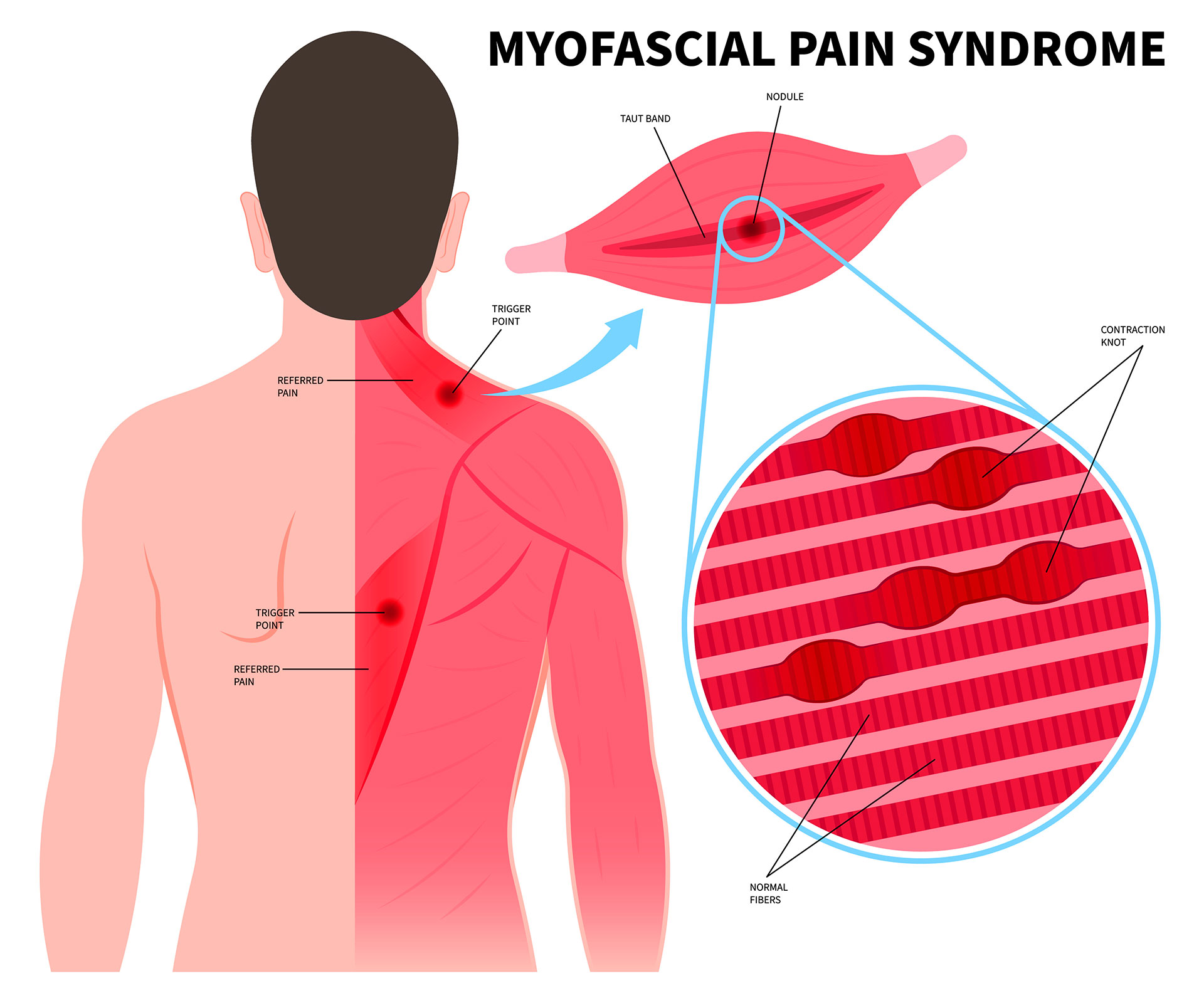
Myofascial pain is a chronic condition involving sensitive trigger points within muscles and surrounding connective tissue. These tight, irritated areas can produce localized pain or radiate discomfort to other parts of the body. Myofascial pain often develops from muscle overuse, poor posture, stress, or repetitive strain. At CURA Pain Centers, we carefully evaluate muscular tension patterns and nerve involvement to provide minimally invasive treatments designed to relieve trigger point irritation and restore functional movement.
What Causes Myofascial Pain?
Myofascial pain commonly develops when muscle fibers remain contracted due to overuse, trauma, stress, or prolonged poor posture. These sustained contractions can form trigger points that restrict blood flow and increase nerve sensitivity. Over time, untreated muscular imbalance may lead to chronic discomfort.
Patients often experience deep aching pain, muscle tightness, tenderness when pressing on trigger points, and reduced flexibility. Pain may radiate into nearby regions and worsen with activity or stress. Because myofascial symptoms can overlap with joint or nerve conditions, accurate clinical evaluation is essential.
Our specialists assess muscular balance, posture, and neurological findings to determine whether trigger point dysfunction is directly contributing to discomfort.

Minimally Invasive Treatment for Myofascial Pain
At CURA Pain Centers, treatment focuses on reducing muscular tension and calming irritated trigger points without immediate surgery whenever possible. Depending on symptom severity, options may include image-guided trigger point injections, targeted therapies, or other interventional procedures performed safely in-office.
These minimally invasive therapies aim to relieve pain, restore flexibility, and prevent recurrence of muscle irritation. Many patients experience meaningful improvement after appropriately directed care. If persistent muscle pain is limiting your daily activities, early specialized evaluation can help support long-term muscular stability and comfort.